
Consider the question: Who are you? Or, better yet: who do you think you are?
Sometimes, when we hear this question, it’s delivered in an accusatory tone. I don’t mean it that way. I’m interested in it for a different reason. I’ve always been drawn to patterns of communication—especially moments when someone’s choice of words reveals more than they intend. Those moments don’t just tell us what matters to someone; they reveal how that person sees themselves. They point to the identity being claimed … or perhaps the identity that is beingresisted and quietly avoided.
As an executive coach, my work is not about telling people what what they should say. It’s about helping them notice what their language already reveals—and what that language suggests about who they believe they are, so they can decide more consciously how they want to show up.
Sometimes those moments appear in coaching conversations. But sometimes they appear in the stories we return to again and again.
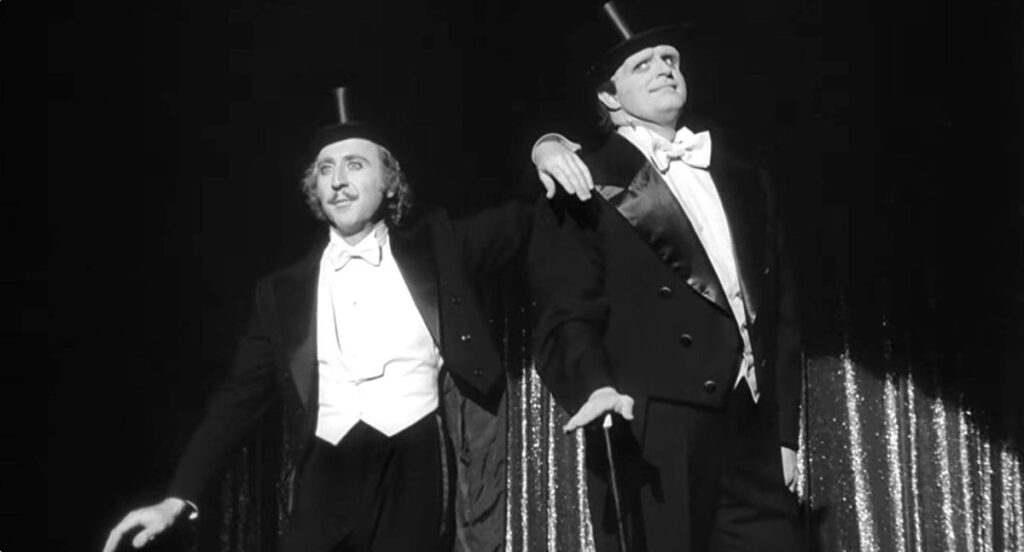
One of my favorite examples comes from the movie Young Frankenstein, which I happened to watch again over the holidays. I keep coming back to this film because identity is on full display. It contains two moments—one early, one late—where identity is revealed not through action, but through language. Together, they tell a surprisingly serious story about identity and transformation.
Early in the film, Dr. Frederick Frankenstein is embarrassed by his lineage. He wants nothing to do with his grandfather, Victor Frankenstein, and goes to great lengths to distance himself from the name and what it represents. He insists on a different pronunciation—“Fronkensteen”—and dismisses his grandfather as a “famous cuckoo.” His word choices are doing very specific work. They allow him to deny an identity he finds uncomfortable and to discredit a legacy he doesn’t want to inherit.
That changes when he studies his grandfather’s notes and begins to see what might actually be possible. Embarrassment gives way to ambition and curiosity. After successfully building and then taming his creation, Frederick declares that together he and the Monster will “make the greatest single contribution to science since the creation of fire.”
Moments later, his assistant Inga calls out, “Dr. Fronkensteen, are you all right?”
His response is emphatic, with clear pronunciation: “My name is Frankenstein!”
In a single sentence, he stops hiding. Nothing about Frederick has fundamentally changed—his intellect, ambition, and capability were already there. What changed is his willingness to stand up for who he is. And if you’ve ever seen this movie in a crowded theater, you know that this is the moment when the audience cheers.
This kind of moment is mirrored at the end of the film, this time through the Monster himself. As the villagers storm the castle and prepare to carry Dr. Frankenstein away, the Monster awakens and commands them: “Put that man down.”
Inspector Kemp snaps back: “And just who do you think you are to order these people about?”
The Monster answers forcefully: “I am the Monster!”
Again, the language matters. He doesn’t qualify it or soften it. He doesn’t say “I think I am” or “I’m trying to be.” He owns it.
Once again, nothing about the character’s physical form has changed. What changes is perception—his own and everyone else’s. He moves from being seen as a dangerous brute to being recognized as a reasonable being. The villagers hesitate and the inspector backs down. His authority emerges not from force, but from his clarity of identity.
What’s striking about both moments is that neither character becomes a different person. The transformation is not about acquiring a different identity, but about aligning their expression with a more authentic identity. When the characters see themselves differently, they are experienced differently. That’s a leadership lesson hiding in plain sight.
I invite you to remember that leadership is fundamentally social. It doesn’t live in intentions or internal narratives; it lives in relationships and how others experience you. Skills, techniques, and behaviors matter, but they are always interpreted through the lens of identity. When people aren’t sure who you are, your behavior feels inconsistent. When they feel that they truly know you – because you know yourself – then trust has something solid to attach to.
We become leaders when someone chooses to follow us—not because they have to, not because a title demands it, but because they believe in the person in front of them. That belief depends on coherence: a sense that this person knows who they are and is willing to stand behind it.
As a coach, I’m not interested in helping people reinvent themselves. I would never ask someone to become something they are not. My work is about helping leaders see themselves more clearly, and understand how that self-understanding shows up in their language, their presence, and their decisions. Sometimes that clarity leads to new habits. Sometimes it leads to new environments. But it always begins with identity.
So consider this: when posed with the question about who you think you are, what does your language reveal?